

How to Choose the Best Wheel Stops for Your Parking Space in Qatar
Parking wheel stops, also known as parking curbs or wheel stoppers, are essential safety devices used in parking lots to prevent vehicles from overshooting their designated spaces. In Qatar, wheel stops for parking help protect vehicles, pedestrians, property, and surrounding infrastructure from damage. They use durable materials such as rubber, plastic, or concrete to handle regular use in parking spaces. Residential, commercial, and public car parks widely use these parking wheel stops.
Selecting the right wheel stops for parking spaces in Qatar is a key decision when designing safe, efficient, and compliant parking facilities. wheel stoppers help define parking boundaries, protect pedestrians and structures, and improve the overall parking experience.
However, not all wheel stops are the same; choosing the right type depends on your parking layout, traffic volume, vehicle types, and environmental conditions.
Purpose of Parking Wheel Stops
Before choosing products, it’s important to understand why wheel stoppers are installed in parking areas:
- Prevent vehicle overrun: Wheel stops for parking prevent vehicles from hitting walls, curbs, walkways, landscaping, or pedestrians.
- Improve parking alignment: They help drivers park correctly within the designated stall.
- Improve safety: Clearly visible parking wheel stops reduce the risk of accidents, especially in dimly lit areas.
Support regulatory compliance: In Qatar, parking design guidelines often recommend wheel stops to protect pedestrian zones and adjacent structures.
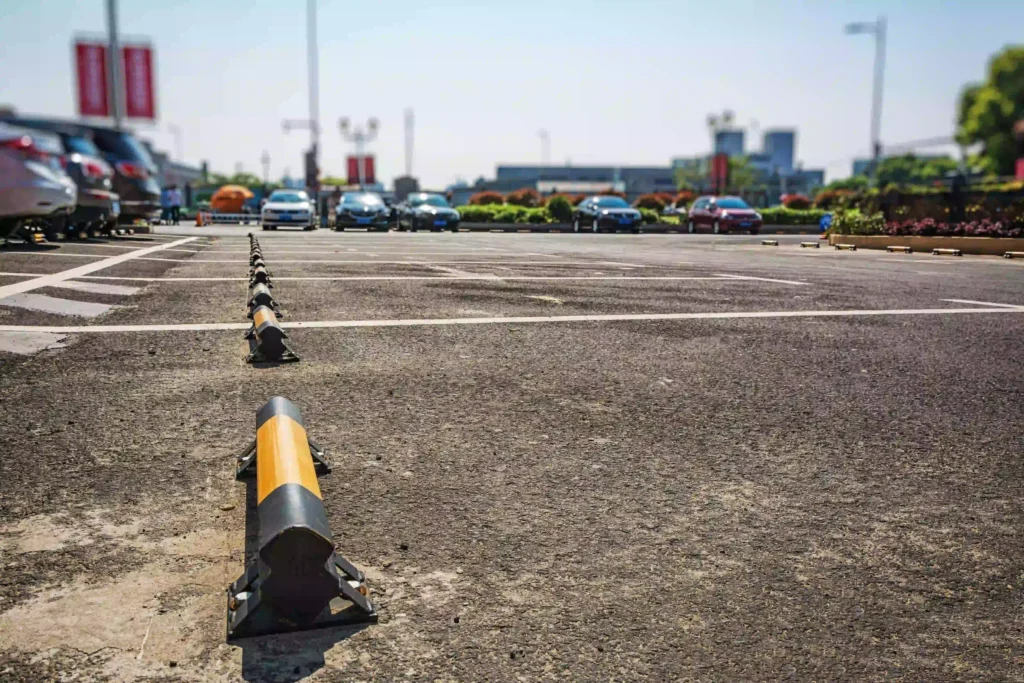
Choose the Right Material for Wheel Stops
Wheel stops for parking are typically made from weather-resistant materials to withstand heat, UV exposure, and repeated vehicle impact. Common options include:
Rubber Parking Stops
- Advantages: Flexible, impact-absorbing, UV-resistant, and less likely to damage vehicle tires. Many rubber parking stops are manufactured from recycled materials.
- Best for: Medium-traffic areas such as residential buildings, office parking lots, shopping malls, and corporate campuses.
Plastic Wheel Stops
- Advantages: Lightweight, easy to install, and cost-effective.
- Best for: Temporary parking areas, event sites, or low-traffic zones.
Concrete Parking Wheel Stops
- Advantages: Highly durable and suitable for heavy-traffic outdoor parking areas.
- Consideration: Requires secure anchoring and professional installation.
Metal or Steel-Reinforced Wheel Stops
- Advantages: Maximum strength and long service life, ideal for industrial and logistics facilities.
Consideration: May require protective coatings or surface layers to reduce tire wear.
Match Wheel Stop Size to Your Vehicles
Dimensions play a critical role in the effectiveness of wheel stoppers. The height, length, and width should match the vehicles using the parking space:
- Standard passenger vehicles: Typically require wheel stops around 100 mm in height and 1650 mm in length, suitable for sedans and small SUVs.
- Larger SUVs and light commercial vehicles: May need slightly taller and stronger wheel stops for parking control.
- Heavy vehicles: Benefit from concrete or steel-reinforced rubber parking stops.
Correct sizing ensures wheel stops function effectively without creating obstacles for drivers.
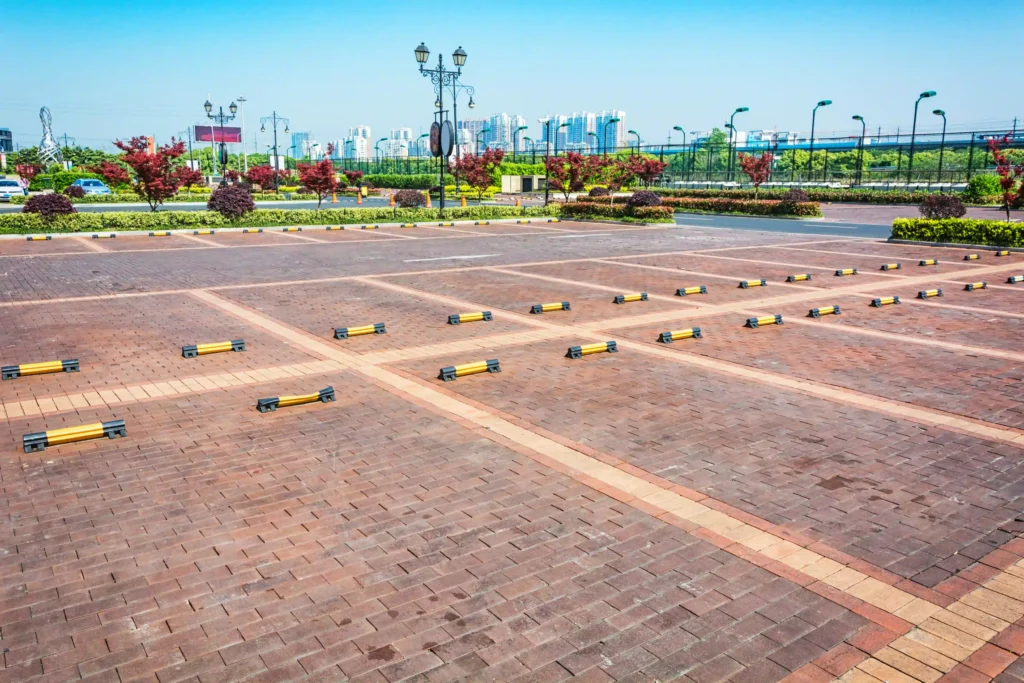
Consider Visibility and Safety Features
Visibility is especially important in covered or nighttime parking facilities:
- Install parking wheel stops with reflective strips or high-contrast colors such as yellow and black to improve visibility
- Proper visibility helps guide drivers accurately and reduces minor collisions.
Ensure wheel stops for parking are installed in a way that does not create tripping hazards for pedestrians.
Installation Surface and Method
The installation surface directly affects the durability of parking wheel stops:
- Concrete surfaces: Typically require bolted anchoring for permanent installation.
- Asphalt surfaces: May need specialized anchors or adhesives suitable for flexible surfaces.
Correct installation ensures rubber parking stops and other materials remain secure and aligned over time.
Compliance and Local Best Practices in Qatar
Parking facilities in Qatar often follow recommended standards for wheel stop placement, spacing, and dimensions. Using compliant wheel stops for parking helps meet safety expectations for commercial, residential, and public infrastructure projects while protecting vehicles and pedestrians.
Budget and Maintenance Considerations
Budget: Rubber parking stops and plastic options are cost-effective solutions, while concrete and reinforced wheel stops provide long-term durability.
Maintenance: Regular inspections help ensure wheel stoppers remain visible, securely fixed, and effective.
Finalising the right parking wheel stops for your parking space in Qatar involves balancing material, size, visibility, durability, and usage requirements. Whether for a commercial parking facility or a residential compound, properly selected wheel stops for parking improve safety, organisation, and operational efficiency.
Need expert guidance on selecting high-quality rubber parking stops or other wheel stop solutions? Contact Inspiron for professional advice and reliable parking safety products tailored to your project requirements in Qatar.